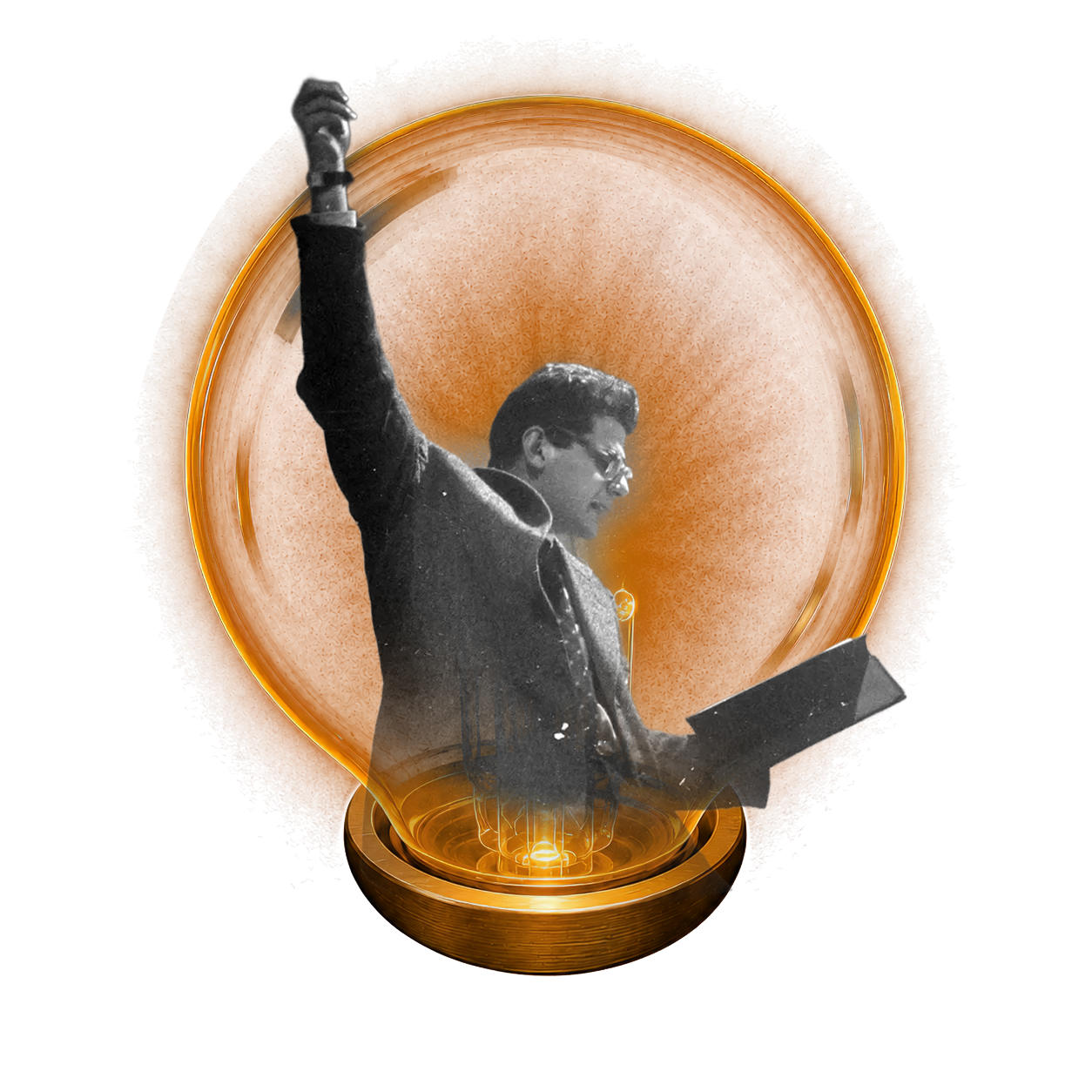
That was Dirk Dirksen talking to the crowd from this exact stage.
If you were standing in this room back then, he probably insulted you, your favorite band, and the way you dressed. He called the audience "animals." He encouraged popcorn fights. He stood right here with a little dog named Dummy tucked under his arm, making himself a literal target for whatever beer cans or spit people wanted to throw his way. He got his nose broken seven times doing it.
They called him the "Pope of Punk," but Dirk didn't care about the labels. He didn't even call it punk rock—he called it "avant-garde rock theater." He ran the calendar, held the microphone, and created a legendary, confrontational, prove-it-to-me room where bands had to stand on their own two feet or get laughed off the floor.
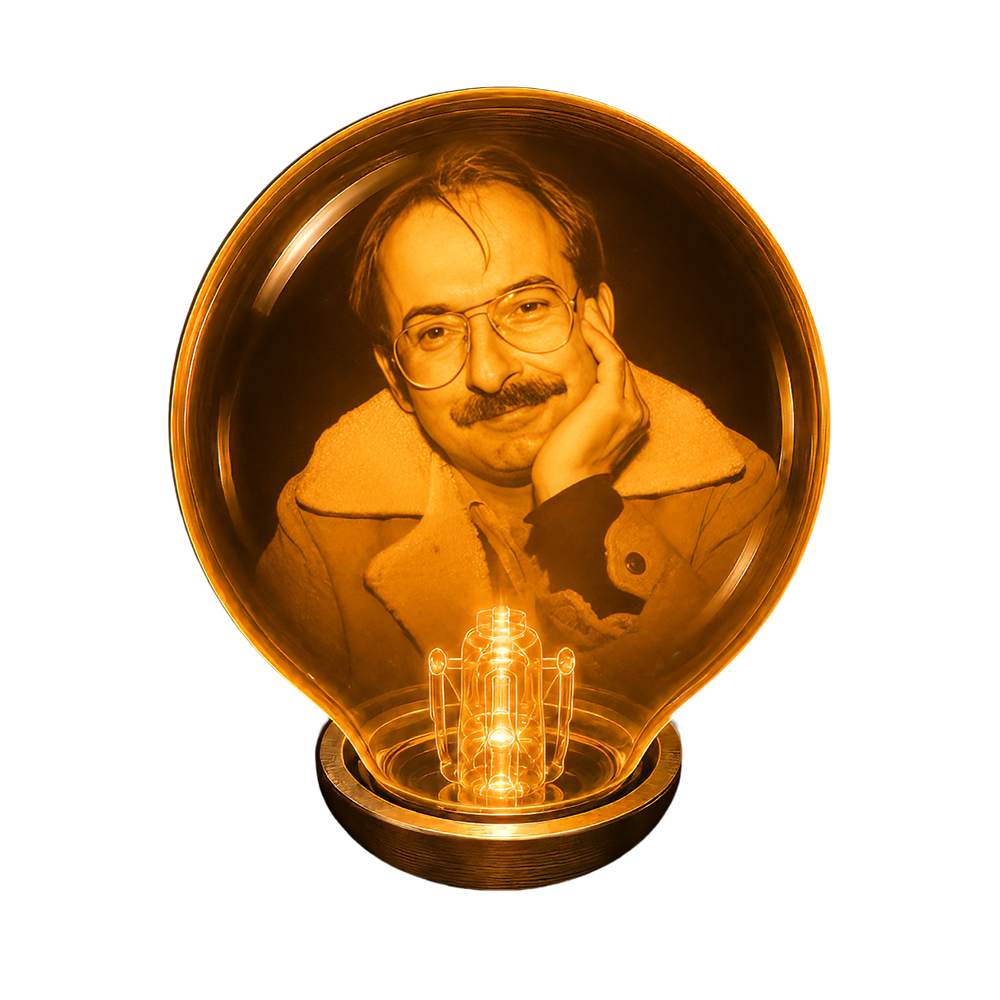
Dirk was a lifelong promoter who knew talent didn't always come in a neat package. Back in 1957 down in Los Angeles, he produced a wild, 12-hour live television show out of a car dealership called Rocket to Stardom. That was the show where an unknown Lenny Bruce got early airtime, and where an 80-year-old toothless woman rode the bus all day just for five minutes on camera to recite Shakespeare. Dirk loved her for it. He loved what it meant to her just to be in the spotlight.
He managed tours for Ray Charles, the Supremes, and the Doors. He even ran a joke campaign for comedian Pat Paulsen’s presidential run in 1968. But when he went to CBS big shot William Paley to pitch a show about unproven amateurs called Whatever, the network executives panicked at the sheer potential for anarchy and showed him the door.
In 1974, just two nights after moving up to San Francisco, Dirk walked into 435 Broadway. It was a Filipino supper club back then, looking for some extra business late at night. Dirk started booking things. He brought in radical comedy troupes, early performances by Whoopi Goldberg, and eventually, the loudest, rowdiest underground music on the West Coast. Robin Williams famously summed it up best, saying that comedy hell was simply "opening for the Ramones at the Mabuhay Gardens."
BRICKS & SWEAT: WHY IT MATTERS
Dirk didn't just book the bands; he pushed them. He threw himself massive birthday bashes where he staged his own floggings, mock beheadings, and one year, had himself burned at the stake.
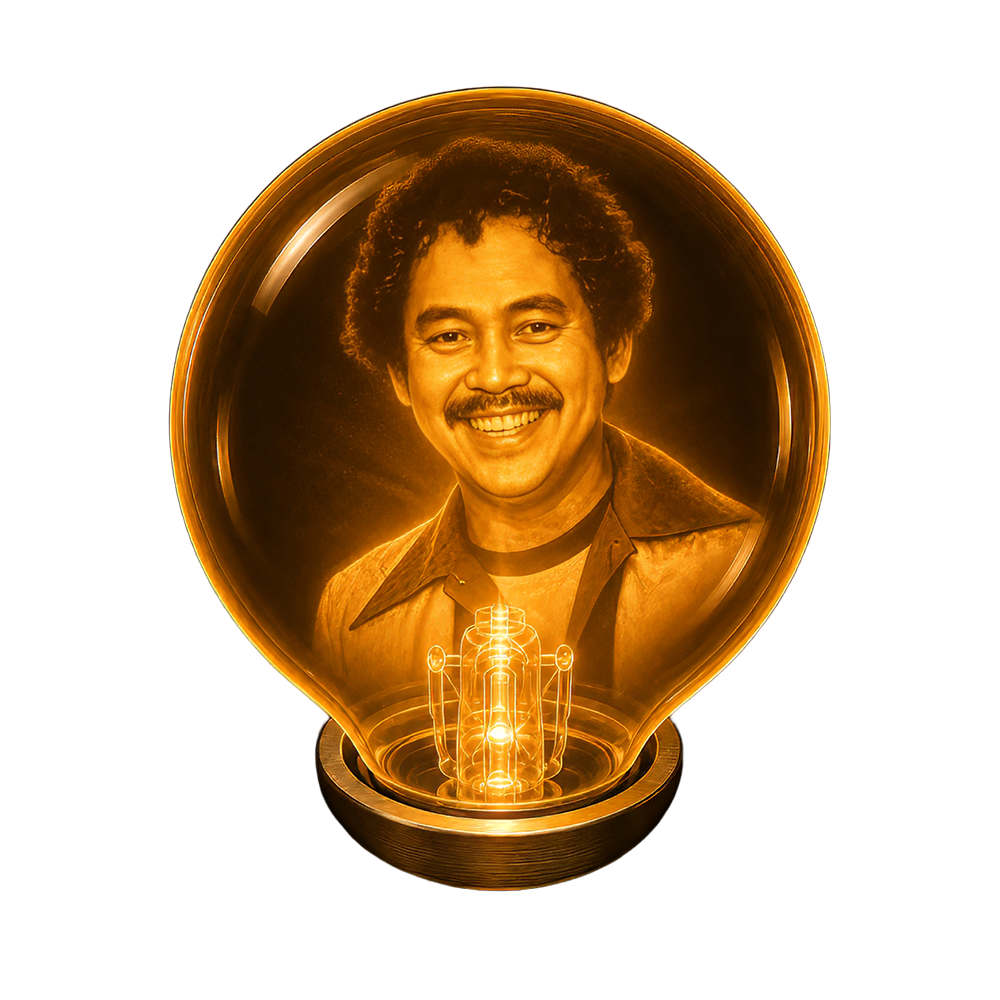
But beneath all the noise and the insults, Dirk loved the people who came through these doors. They were his family. He ran free spaghetti nights on Mondays because he knew the kids in the scene were broke. Decades later, long after the venue closed its doors in 1984, he lived across the street in the Mission and spent his time teaching cooking classes to underprivileged kids at the recreation center.
He was a father figure to a generation of misfits who had nowhere else to go. He gave people a place to explore their dreams, no matter how loud or strange those dreams were.
Under his watch, the Mabuhay Gardens hosted early, history-making gigs for the Dead Kennedys, The Avengers, Devo, Black Flag, Flipper, and the Mutants. He taped everything, documenting the scene from the ground up because he wanted to capture a movement right at its birth.
“He was super obnoxious onstage. He would stand there with that little dog under his arm, being a target for whatever they wanted to throw. At the same time, he loved all those people. In a way, they were his family.”
— Penelope Houston, The Avengers