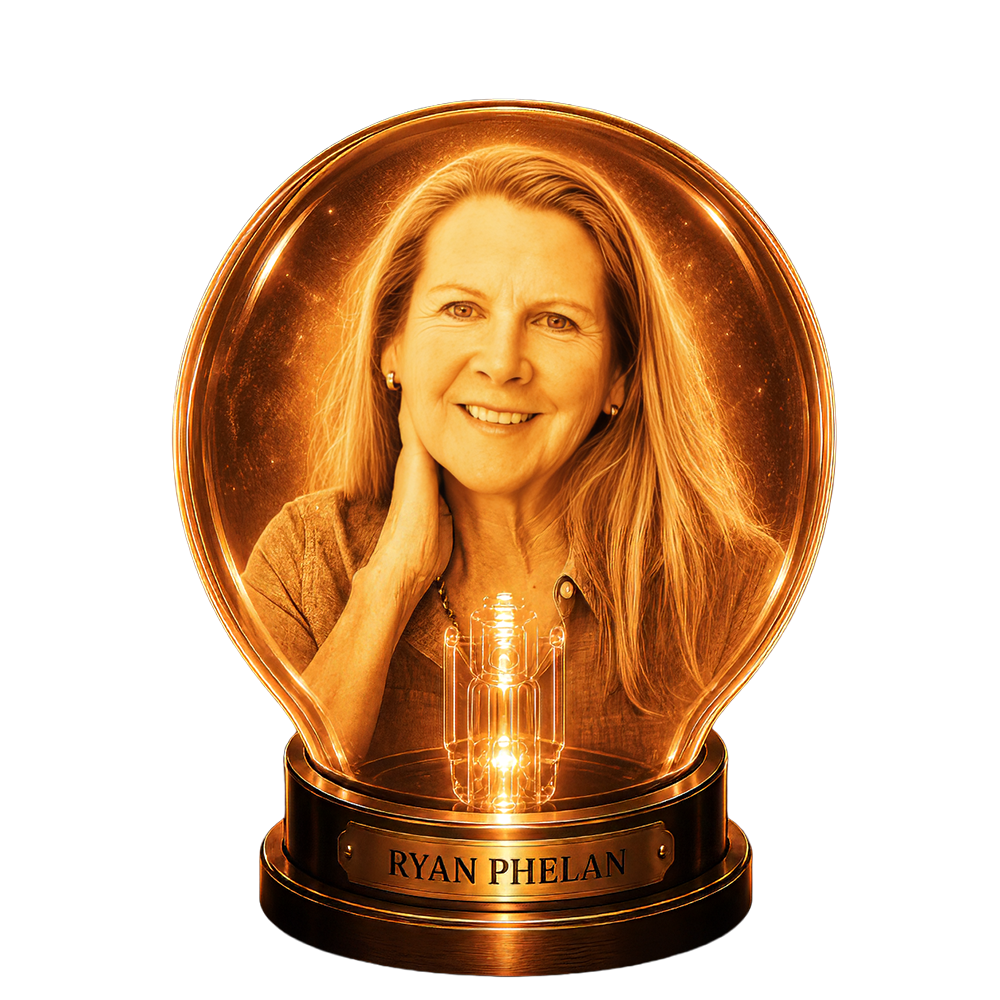
Ryan Phelan is the San Francisco conservation pioneer who founded Revive & Restore, the organization bringing biotechnology to wildlife conservation — genetic rescue for species running out of options. Her letter on this sign is no accident: the R is for Revive and Restore, which is also exactly what this campaign asks of a 107-year-old building. Lights ON Broadway runs on her logic — that you save what you have, you bank it carefully, and you trust a future you can't yet see to do something transformative with it. Every story archived here, every bulb relit, is a cell line for the neighborhood's memory.
BRICKS & SWEAT: WHY IT MATTERS
When the black-footed ferret was down to a founder gene pool of seven animals — all ten thousand bred in captivity descended from those seven — Phelan's team found what someone had quietly banked forty years earlier: cell lines from two wild-caught ferrets, frozen at the San Diego Frozen Zoo in 1981, before cloning even existed. Those cells carried up to three times the genetic diversity of any living ferret. In 2020, her organization and its partners cloned Elizabeth Ann — the first endangered species in America ever cloned — restoring in one birth what decades of careful breeding never could. Not by moving animals, but by moving genes.
Then she asked the bigger question: what else has ever been banked? The answer — less than 14 percent of America's 1,500 threatened and endangered species have any form of cryopreservation — became a roadmap. Phelan's biobanking initiative with the U.S. Fish and Wildlife Service aims to close that gap species by species, starting with the Mexican wolf, two hundred left in the wild. Her gift, the one colleagues keep being surprised by, is seeing the connection years before the crowd does: that the most radical act of conservation is the unglamorous one — sampling, sequencing, banking — done today, on faith, for tools that don't exist yet.